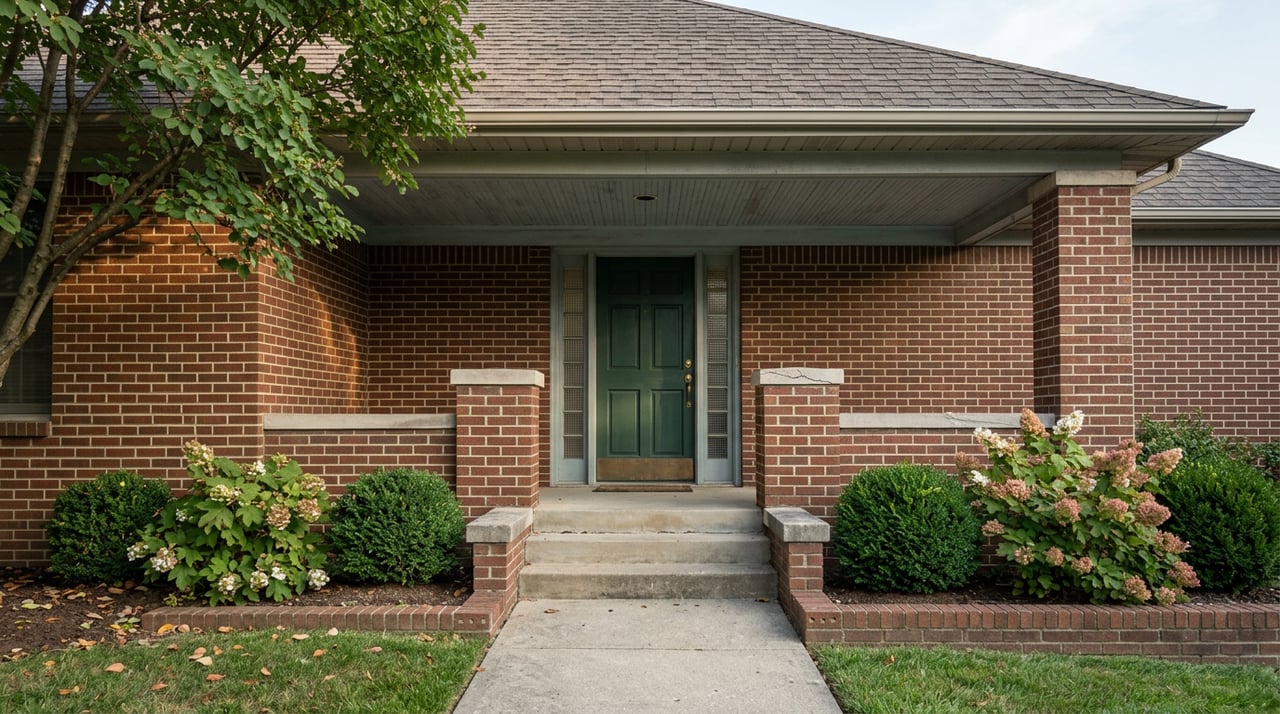
St. Louis Hills Doesn't Have a Historic District. It Has Something the City Can't Touch.
September 10, 2026
September 10, 2026
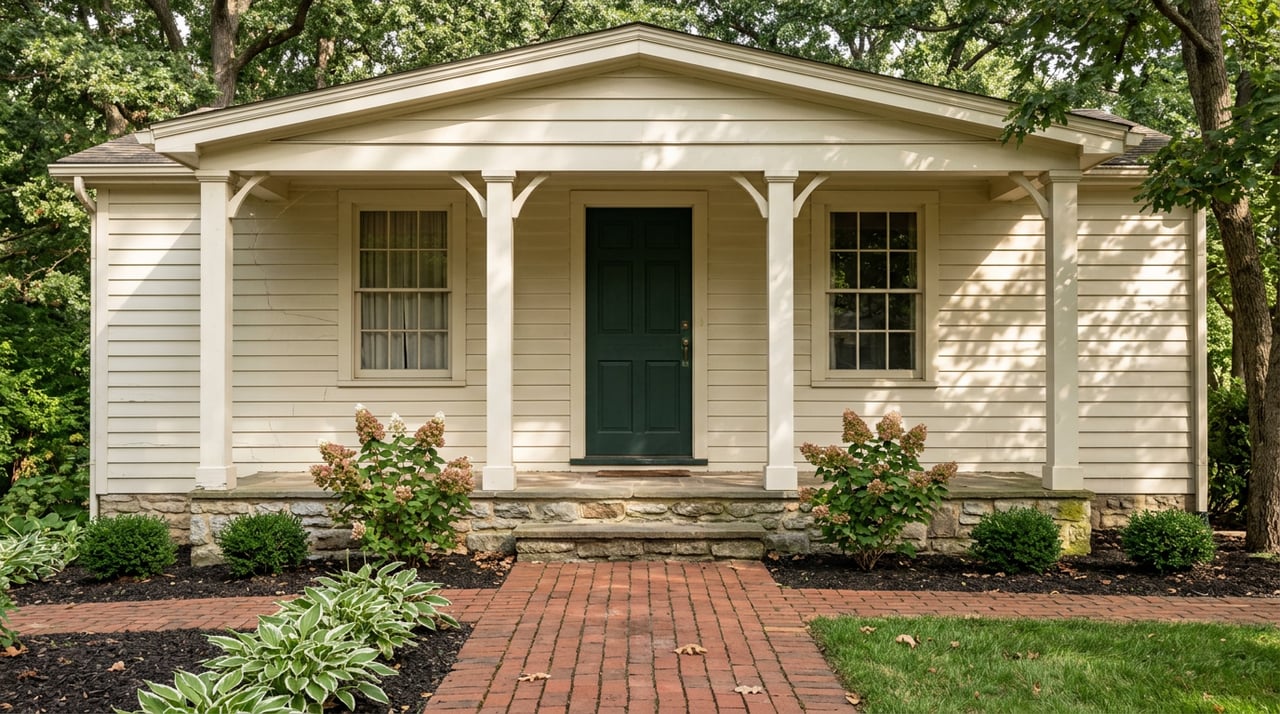
If you ask around St. Louis Hills why the block still looks the way it did in 1938, someone will eventually say the words "historic district." They mean it as a compliment. They also have it wrong, and the mistake costs people time and money at exactly the wrong moment: mid-renovation, or mid-closing.
St. Louis Hills is not one of the city's locally-designated historic districts. Check the Cultural Resources Office list and you will not find it among the seventeen neighborhoods, places like Soulard, Shaw, Lafayette Square, and the Central West End, where the city reviews your paint colors, your fence height, and your window replacements before issuing a permit. St. Louis Hills isn't on that list. Which means the office that polices exterior changes in those seventeen districts has no authority here at all.
So what actually keeps St. Louis Hills looking like St. Louis Hills? Not a city ordinance. A stack of paper filed with the Recorder of Deeds nearly a century ago, and a separate, unrelated inspection every seller in the city has to clear regardless of neighborhood. Two different systems, doing two different jobs, and almost nobody buying or selling here understands which one applies to which problem.
Start with the part that has nothing to do with history at all. Every residential property in the City of St. Louis sits inside a Housing Conservation District, a citywide designation created by Ordinance No. 71835. Before title can transfer on an occupied home, the seller needs a current Certificate of Inspection, a basic code check for minimum interior and exterior standards under the International Property Maintenance Code.
This isn't a preservation review. It doesn't care whether your porch has the right proportions or your window trim matches the block. It checks smoke detectors, wiring hazards, water and electric service, that kind of thing. Water and electric have to be operational at the time of inspection or the inspector can't finish the walkthrough. If violations turn up, the owner gets 30 days to fix them before the certificate issues. Once issued, the certificate is good for 12 months, so if your last sale or inspection happened more than a year ago, you're scheduling a new one before you can close.
The application costs $120 for a vacant unit and $200 for an occupied one under the city's current fee schedule, and you can request the inspection online through the city's permitting portal. None of this touches design. A brand new vinyl-sided addition with no permit history can sail through a Housing Conservation inspection as long as the smoke detectors work. That's the part that trips people up: a clean HCD certificate tells you nothing about whether the home complies with the actual document that was supposed to keep the neighborhood's character intact.
That document is the subdivision indenture, and in St. Louis Hills it goes back to the neighborhood's original developer, Cyrus Crane Willmore. Starting in 1929, Willmore recorded restrictions covering roughly 1,300 homes in the original St. Louis Hills subdivision. He filed another one in 1950 for an expansion called St. Louis Hills Estates No. 4, this time with 18 separate restrictions and conditions. Research into St. Louis's historical subdivision records describes these instruments as running to twenty or thirty pages, covering everything from building lines to porch design, along with lot setbacks, materials, and where a garage or fence could go.
These are private contracts, not city code. The Cultural Resources Office was never a party to them and has no role in enforcing them. If a neighbor believes your new addition violates the 1950 indenture's building line, the city building department isn't the venue. That's a civil matter, resolved (if at all) through the courts, not through permit denial. It's a slower, more expensive, and far less predictable process than the Certificate of Appropriateness review that governs a real historic district. No design review board hears your case in advance. No standard timeline tells you how long a dispute takes. The remedy is a lawsuit, filed by whoever has standing to bring one, whenever they notice.
That gap matters because most St. Louis Hills buyers never see the indenture. It doesn't show up on a standard listing. It's not part of the Housing Conservation inspection. It surfaces, if it surfaces at all, during a title search, and even then, only if someone reads past the boilerplate.
There's a second reason to actually read these older instruments before treating them as quaint. Some subdivision indentures recorded in St. Louis and the surrounding county between the 1920s and 1940s carried racially restrictive language, provisions barring sale or occupancy by anyone outside a specified race. An Equal Housing Council mapping project has found roughly 30,000 properties across the city and county still carrying that language somewhere in their deed history. A St. Louis realtor working a routine sale in University City ran into exactly this in 2022, language attached to a home she was helping list, decades after the Fair Housing Act made it unenforceable.
To be clear: these clauses have no legal force. The Fair Housing Act and decades of case law voided them outright, and Missouri law now lets a subdivision strike the language from its indenture without needing every property owner's sign-off. But the paragraphs are often still sitting in the recorded document, because nobody filed the paperwork to remove them. If your title work in St. Louis Hills or a neighboring 1930s-era subdivision turns one up, it's a historical artifact with zero bearing on your transaction, not a live restriction, but it's worth knowing the removal process exists rather than being blindsided by the language itself.
If you're buying in St. Louis Hills and planning an addition, a new fence, or a garage that doesn't match the original footprint, the sequence that actually protects you looks different from what a city historic district would require. You're not waiting on a Cultural Resources Office review. You're asking your title company or attorney to pull the recorded plat and any indenture tied to your specific lot, because restrictions can vary between the original 1929 St. Louis Hills subdivision and later additions like the 1950 Estates No. 4 filing. If a restriction exists and your plans conflict with it, your practical options are a variance negotiated with your neighbors, a formal release recorded with the county, or accepting the legal exposure of proceeding anyway.
None of that shows up on a Housing Conservation inspection report, and none of it is caught by the city's zoning review either, since zoning setbacks and a private indenture's building lines are two more systems that don't automatically match each other. A home can be fully code-compliant, fully zoning-compliant, and still technically out of compliance with a 97-year-old developer's indenture that nobody bothered to release.
For sellers, the practical takeaway is simpler: schedule the Housing Conservation inspection early, since the 30-day repair window and the requirement that water and electric be active can eat into a tight closing timeline if you wait. That inspection has nothing to do with whether your late father's 1962 patio addition matches the original 1929 restrictions, and no amount of code compliance will make an indenture problem disappear if a neighbor decides to raise it.
Does St. Louis Hills have any city historic district protection at all? No. It doesn't appear on the Cultural Resources Office's list of locally-designated historic districts, so the city's design-review process that applies in places like Shaw or Soulard doesn't apply here.
If a title search turns up an old indenture, does that mean I can't renovate? Not necessarily. It means there's a private restriction to evaluate, separate from any city permit. Some restrictions are decades expired or narrowly worded. Others are broad and still enforceable by a neighbor with standing to sue.
Does passing the Housing Conservation inspection mean my home is fully compliant with everything? No. It confirms basic code minimums for interior and exterior conditions. It says nothing about zoning setbacks or private subdivision restrictions.
Who actually enforces an old subdivision indenture? Not the city. Enforcement, if it happens, comes through civil court, typically initiated by another property owner within the same subdivision who believes the restriction has been violated.
Buying or selling in a neighborhood this specific means the fine print actually matters. If you want a straight answer on what applies to a particular St. Louis Hills address before you write an offer or list a home, reach out to Stacy Deutschmann. Let's connect, find your next home, or get a free valuation.


Let me guide you through the complexities of buying or selling your home, eliminating hassles and stress. I look forward to working with you!