St. Louis Hills Home Prices North vs. South of Eichelberger
August 6, 2026
August 6, 2026
Two homes in St. Louis Hills went under contract last month at prices within a few thousand dollars of each other. One was a 1,150-square-foot brick bungalow north of Francis Park with stained glass, an unfinished basement, and original knob-and-tube in a section of the second floor. The other was a 2,400-square-foot postwar ranch south of Eichelberger on a third-acre lot with an attached garage and a slab foundation. Same price band. Very different inspection reports, very different weekend repair lists, very different reasons the buyer wrote the offer.
If you have been shopping St. Louis Hills off the portals, you have seen the neighborhood-level number: a median sale price around $415,000 in June 2026, up double digits year over year, with homes going pending in under a month. What that number will not tell you is that the neighborhood is really two sub-markets sitting under one name, divided by a street the original developer drew in the 1930s. Understanding that line is the difference between overpaying for the wrong product and knowing exactly what your offer is buying.
St. Louis Hills was largely a single developer's project. According to the St. Louis Hills Neighborhood Association, Cyrus Crane Willmore built out the area between roughly 1930 and 1960 and personally donated 70 of the 105 acres that became Willmore Park. He also drew an internal boundary that still shapes pricing today.
North of Eichelberger Street is the original St. Louis Hills. This is where the brick "gingerbread" (technically Tudor Revival) bungalows sit, along with the art deco two- and four-family flats that ring Francis Park. The style vocabulary is specific: zigzagging yellow and brown brick, limestone quoins, terracotta roof tiles, glass block trim, curved corners, porthole windows. The Vedder apartment building on Nottingham, the Hansel-and-Gretel row on the 6300 block of Bancroft, and the eight-sided art deco house on Itaska are all north-of-Eichelberger stock. Lots are modest. Blocks are walkable to LeGrand's Market, Rockwell Beer Garden, Ted Drewes on Chippewa, and the Francis Park loop itself.
South of Eichelberger is what Willmore branded St. Louis Hills Estates. This is postwar territory. The homes here are predominantly brick ranches and 1.5-stories built after World War II, on lots that are meaningfully bigger, with room for attached garages, in-ground pools, and side-yard setbacks that the pre-war grid to the north does not offer. Same neighborhood name on the sign at Hampton and Chippewa. Different product entirely.
Look at recent 63109 comps from May and June 2026 and the split shows up in square footage more than in price.
| North of Eichelberger | South of Eichelberger (Estates) | |
|---|---|---|
| Dominant era | 1930–1945 | 1946–1960 |
| Typical style | Gingerbread bungalow, art deco flat, 1.5-story | Brick ranch, sprawling 1.5-story |
| Typical footprint | 1,100–1,700 sqft | 1,900–2,600 sqft |
| Garage | Detached rear, often single-car | Attached, often two-car |
| Lot | Standard city lot | Deeper lot, occasional pool |
| Character features | Stained glass, arched doorways, glass block, curved brick | Vaulted ceilings, picture windows, main-floor primary |
Recent Estates-side closings tell the story on size. A 2,562-square-foot home on Donovan traded in May. A 2,420-square-foot Sutherland home closed the same week. A 2,284-square-foot Devonshire ranch went under contract in June. Meanwhile, north-of-Eichelberger closings in the same price band included a 1,152-square-foot home on Hilgard and a 1,165-square-foot property on Southland. All in the same MLS neighborhood tag. All in the low-to-mid four hundreds.
The interpretation matters. When St. Louis Magazine reported in January 2026 that a St. Louis Hills bungalow that once sold for $180,000 now brings closer to $325,000, that reference was specifically to the smaller, older, north-of-Eichelberger stock. The Estates ranches at 2,400 square feet were never $180,000 homes to begin with. Averaging them together produces a median that describes neither.
Older brick city stock and postwar suburban-style ranch stock do not fail the same inspection items. If you are writing an offer, the two sides of Eichelberger call for different due diligence.
North-of-Eichelberger homes tend to bring:
South-of-Eichelberger Estates ranches tend to bring:
Neither side is more or less "risky." They are just different problems on different closing timelines. Buyers who plan for the right list negotiate better repair credits.
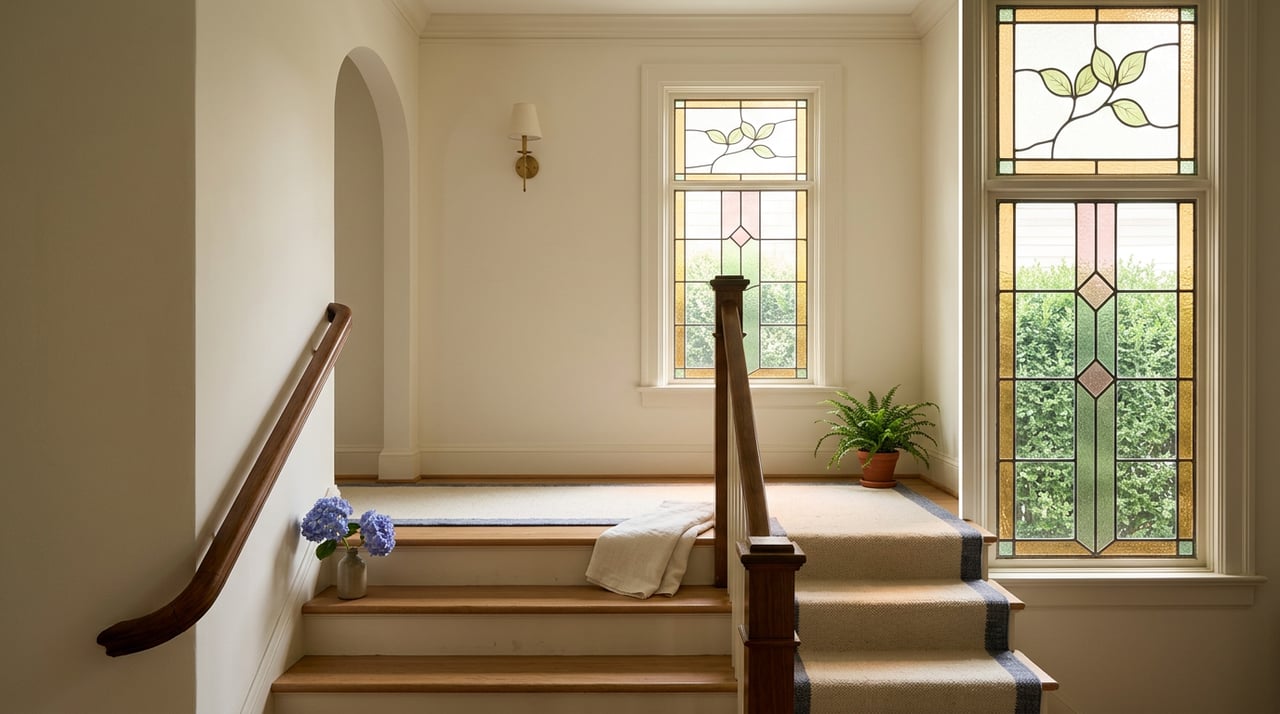
The buyer who does best north of Eichelberger is someone who values walkable-block character over square footage, does not need a second full bath on day one, and is genuinely charmed by the details: the stained glass in the stair landing, the arched plaster opening between living and dining rooms, the terracotta roof tile. This buyer accepts that a 1,300-square-foot floor plan built in 1938 is going to have small closets and one bath upstairs, and that the value is in the block, not the footprint.
The buyer who does best in the Estates is someone whose priorities include an attached garage, a family-sized backyard, main-floor primary suite potential, and a kitchen big enough to gut and redo without moving load-bearing walls. That buyer is often trading a Kirkwood or Webster Groves comp for something similar in size and lot at a city-of-St.-Louis property-tax basis, with quicker access to Highway 44 and downtown.
Both buyers are looking at the same $415,000 median. Neither of them is buying the median.
Broader conditions apply to the whole neighborhood before the internal split kicks in. As of the three months ending May 2026, the City of St. Louis median sale price sat around $255,000, and metro-area homes were selling in roughly 21 days at close to full list. St. Louis Hills specifically outperformed both figures, with a median north of $400,000 and days-on-market around 28 to 29. According to Freddie Mac's Primary Mortgage Market Survey, the 30-year fixed averaged 6.55 percent in mid-July 2026, which is meaningfully below the same week a year prior but well above the levels of 2021.
Translation: this is still a seller's market for well-prepared homes on either side of Eichelberger, and mispriced listings sit. The pricing strategy that works on a 1938 gingerbread with restored original details is not the same one that works on a 1957 ranch with a redone kitchen. Comps have to be pulled from the correct sub-market, not the neighborhood-wide feed.
Is one side of Eichelberger appreciating faster than the other? Both sides have moved up meaningfully over the past decade, but they respond to different demand drivers. North-of-Eichelberger appreciation tracks demand for walkable pre-war city character. Estates appreciation tracks buyers cross-shopping inner-ring suburbs. In practice, both have posted strong gains, and neither has decoupled from the neighborhood-wide trend.
Do the two sides share the same schools, services, and taxes? Yes. The entire neighborhood sits inside the City of St. Louis and inside 63109, so occupancy inspection, sewer lateral program, trash service, and property-tax structure are identical on both sides.
Is new construction a factor in St. Louis Hills? Occasionally. Infill single-family builds appear on the north side when older stock is torn down, and the Estates side sees selective knock-down-rebuilds. Neither is happening at a volume that changes the character of a block.
Should I care about the split if I am selling, not buying? Yes. The buyer pool for your home is not "St. Louis Hills buyers." It is either the gingerbread-and-character pool or the ranch-and-lot pool, and each responds to different staging, photography, and pricing decisions.
The $415,000 median is a starting number, not an answer. What matters is which side of Eichelberger fits the way you actually want to live, and what the inspection report is going to look like on the home you write on. That is the conversation worth having before you tour, not after.
If you are thinking about a purchase or a sale on either side of the line, Stacy Deutschmann can pull the right sub-market comps, walk you through the inspection patterns block by block, and help you write an offer that reflects what you are actually buying. Let's connect and find your next home, or get a free valuation on the one you already own.
Let me guide you through the complexities of buying or selling your home, eliminating hassles and stress. I look forward to working with you!