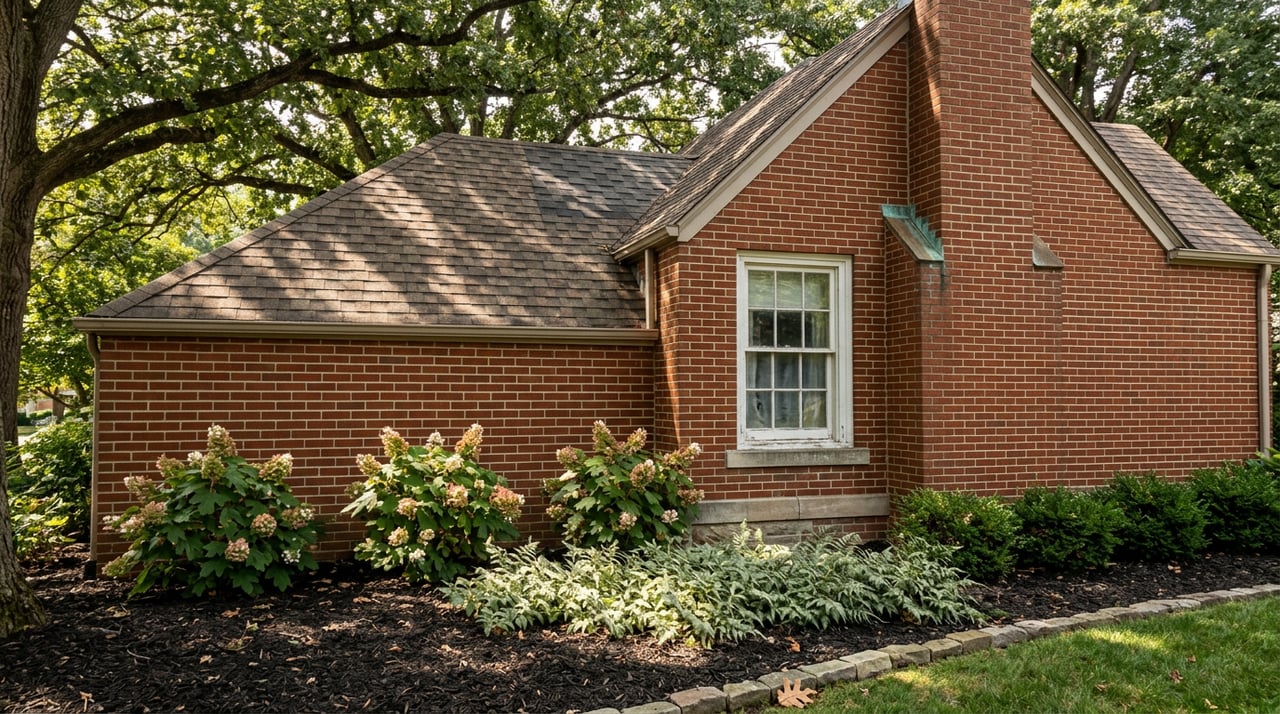
Selling an Older Home in Webster Groves? Start Here
August 13, 2026
August 13, 2026
Every seller of an older Webster Groves home eventually asks some version of the same question: if I list this house as-is, can I skip the sewer camera, the wiring conversation, and the disclosure paperwork? The honest answer is no, and the reason has less to do with contract language than with what's actually inside the walls of a typical Webster Groves house.
Missouri is a caveat emptor state, which sellers often hear as "buyer beware, seller off the hook." That's a partial reading. The state doesn't require a general disclosure form by statute, but it does hold sellers to a fraud standard, and it layers a specific city inspection on top that has nothing to do with what your purchase contract says.
Missouri's disclosure statute is narrow by design. Sellers are required by name to disclose two things: whether the property was ever used to produce methamphetamine, and whether it sits on a permitted or unpermitted solid waste disposal site. That's close to the entire list of statutory triggers. There's no state law requiring a seller to complete a general property condition form the way some states mandate.
What fills the gap is common law fraud and the agent's own statutory duty. Missouri's real estate licensing statute puts it plainly:
A licensee acting as a seller's or landlord's agent... shall disclose to any customer all adverse material facts actually known or that should have been known by the licensee.
That single sentence is why "as-is" language in a contract protects a seller from having to make repairs, not from having to be honest about what they know. If a seller knows about a cracked sewer lateral or an unresolved wiring issue and stays quiet, "as-is" doesn't cover that. It's the difference between "I won't fix it" and "I won't tell you about it," and Missouri law only protects the first one.
In most St. Louis suburbs, a pre-1960s electrical panel or a clay sewer lateral is a notable finding on an inspection report. In Webster Groves, it's closer to the default.
The Webster Groves Historical Society's Century Home Plaque program tracks this directly: by the end of this decade, more than 3,400 of the city's roughly 8,700 homes will be at least 100 years old, and the single biggest wave of construction happened in the 1920s, when more than 1,750 houses went up in a single decade, more than every prior decade combined. Layer on the mid-century infill that followed through the 1960s, and the result is a housing stock where "built before modern code" describes most of the inventory, not a fraction of it.
That matters for a seller because it changes the right question. It's not "does my house have one of these issues?" It's "which one, and have I confirmed it before a buyer's inspector does?"
| Era of construction | System most likely to need attention |
|---|---|
| 1890s to 1930s (Century homes, Old Orchard, Tuxedo Park era) | Clay sewer laterals, original knob-and-tube wiring in unrenovated rooms, spaced-board roof decking |
| 1940s to 1960s (the city's largest single housing cohort) | Cast iron waste lines, galvanized supply pipes, partial electrical updates layered over original wiring |
| 2000s and later | Modern systems, though still a minority of the city's overall stock |
Three specific issues surface often enough in Webster Groves inspections that they're worth handling before a buyer's inspector finds them cold.
Sewer laterals. The private pipe connecting a house to the public sewer main is the homeowner's responsibility, not the city's, and Webster Groves' mature tree canopy is exactly the condition that causes root intrusion in aging clay pipe. The city does run its own Sewer Lateral Repair Program for homeowners who've already tried cabling and confirmed a defect: the city's diagnostic contractor performs a camera inspection, and if the lateral is found to be genuinely defective, the homeowner can gather three itemized bids before applying for reimbursement. As of late 2025, the program's reimbursement caps were reported at up to $3,500 for repairs on private property and up to $8,000 if the defect is located under the street. A pre-listing camera scope costs a fraction of what a surprise backup costs in a renegotiation.
Knob-and-tube wiring. Homes wired before the mid-1960s predate grounding as a standard requirement, and a three-prong outlet added during a later renovation doesn't necessarily mean the circuit behind it was actually grounded. Some lenders and insurers are reluctant to write policies or approve financing on homes with active knob-and-tube systems, which means an undisclosed wiring issue doesn't just risk a disclosure dispute, it can stall a buyer's financing days before closing.
Roof decking. Local roofing contractors point out that pre-1960s Webster Groves homes were commonly built with spaced board sheathing rather than solid plywood decking, which affects both storm performance and how an insurance claim gets adjusted after hail or wind damage. It's not a defect by itself, but it's the kind of detail an inspector will flag and a buyer will ask about, so it's better answered before the offer than after.
Here's the part that catches sellers off guard even when they've handled everything above: Webster Groves requires its own Residential Occupancy Inspection before a new owner can occupy the home, and it runs independently of what the purchase agreement says. The seller schedules it, pays a $75 inspection fee, and the inspection itself takes roughly 60 to 90 minutes. A house can still be sold as-is, and a buyer can still agree to take on some or all of the repairs, but the property can't be occupied until the violations found during that inspection are corrected. Skip a step and there's an additional $50 fee for a re-inspection.
In practice, this means "as-is" describes who pays for repairs, not whether the city's own code inspection happens at all. A seller who assumes an as-is sale sidesteps every inspection is planning around a rule that doesn't exist.
As of July 2026, Webster Groves homes carried a median list price around $479,000 and a median price per square foot near $261, with homes spending a median of roughly two weeks on the market before going under contract. That's a fast window, and it cuts two ways depending on how prepared a seller is.
In a market moving that quickly, a clean pre-listing sewer scope and a documented answer on the home's wiring don't just prevent an unpleasant surprise, they let a seller price at the top of that range with confidence and keep the closing timeline intact when an inspector inevitably asks about the lateral or the panel. A seller who waits for the buyer's inspection to raise these issues cold is negotiating from a weaker position in exactly the week they can least afford to lose momentum.
Does "as-is" mean I don't have to disclose known problems? No. As-is affects who pays for repairs. It doesn't override Missouri's fraud standard or an agent's duty to disclose known adverse material facts.
Do I need a Missouri Seller's Disclosure Statement by law? There's no statute requiring the standard form itself, but most transactions use it anyway because it documents what you knew, which protects you as much as it informs the buyer.
Can the city really require an inspection on an as-is sale? Yes. The Residential Occupancy Inspection applies regardless of contract terms, and the property can't be occupied by a new owner until the violations it identifies are resolved.
If you're getting ready to list an older Webster Groves home and want a straight read on what an inspector is likely to flag before you're in a renegotiation, Stacy Deutschmann can walk through it with you street by street. Let's connect and find your next home or get a free valuation.

Let me guide you through the complexities of buying or selling your home, eliminating hassles and stress. I look forward to working with you!